You know when you say ok let's try this just to see how it works?
I may actually use the tryout in the real stairs. I like the way this is developing:
This is tha real thing drawing:
And this guy explains pretty dam well how to make that drawing.
http://www.thisiscarpentry.com/2011/11/25/traditional-tangent-handrail/
I just could not understand the drawing so decided to make a real size model. The handrail is at my mom's house, and my tools at my dad's, so I made a rough sketch of the size needed and came here to try it out. I didn't really use a proper drawing since we want to change a bit the height of the rails, so perfect excuse to fit everything to the turn and not the other way around. I marked the orientation of the rail (Fig.2 in previous image) at either end of the wood, and then draw the line by hand, I can see very well where it's still not right, you don't really need to draw everything if you know what you are looking for. I'm looking for a smooth handrail, like the one we had in Graz. Fuck the angles, the lines and second derivative of the surface, you can feel when things are ok, and this feels like a rail, if a bit rough in some parts.
I'm doing everything with a spoke shave and a vice. The worst is how to grab this thing.
It would be real cool to have planes made for this curvature, for both concave and convex regions, however that would only work for constant pitch handrails. This method allows you to work in any kind of handrail, so it's one or the other.
6 months ago I could not even think of this turn, it was just too much for me. Now I see and I make it, and I see it because I'm making it. Feels like I'm learning. And I'm pretty sure this is the first handrail turn made in chile in the last 50 years at least. I'm opening a repair shop in Valparaiso when I come back, repair old poor houses the way it used to be done, with vino at lunch. Or teach kids in a technical school to make this. You don't need a phd in physics to understand it, you need someone to tell you that you can do it and show you how, and be there while you practice it. When I teach my students to sharpen saws I don't tell me "look, this is actually impossible, so don't even think about doing it yourself, you need your whole life to understand it, but anyway let's try it", I tell them "this is done like this and like that, now you try it. No, that's wrong, do it like this, do it like that. Done. Now try the next side." And the guy is ready to start sharpening saws for the rest of his life. Imagine a course where in high school you learn this no bullshit woodworking: it's not the tools nor the money, it's your skill and knowledge, and you see, after 5 days you are already making rabetted dadoed half blinded splice joints. What the oldies managed to do seems impossible to reproduce to us because we have become used to a different world, a world where only money moves things, and we tend to think we need money, big machines and a fat car to make things happen. But if you show people what's possible to do by yourself, without all the crap, they just get used to it, and they do it. I'm really tired of what seem to be a bunch of little egos trying to make things appear more difficult than what they are, mystifying knowledge and selling mambo yambo and powdered steels. We are just doing stuff that man has being doing since at least the Egyptians, rubbing metal with stone so we can cut some wood into a straight line or a curve — and that's all. Our bodies are made to make this shit happen.
Ok, I could have foresee that a glue line on the top is a bit stupid, but I didn't have rauli that wide.
A study of the aesthetico-political consequences of japanese saw sharpening — or something like that.
Wednesday, September 2, 2015
Sunday, August 30, 2015
Smart Gal
Sunday night ideological propaganda. Or perhaps a reasonable gal talking about the world.
Make some tea, invite a friend to your couch, and enjoy. Not the truth in the form of hip-hop, but the truth nevertheless.
Tuesday, August 25, 2015
Open Source Forge
Heads up for my man Mark there in the north, he just sent me pictures of his forge in the making. I love the art...
south elevation
------------------------------ ------------------------------ ------------------------------ -------------
east elevation
------------------------------ ------------------------------ ------------------------------ -------------
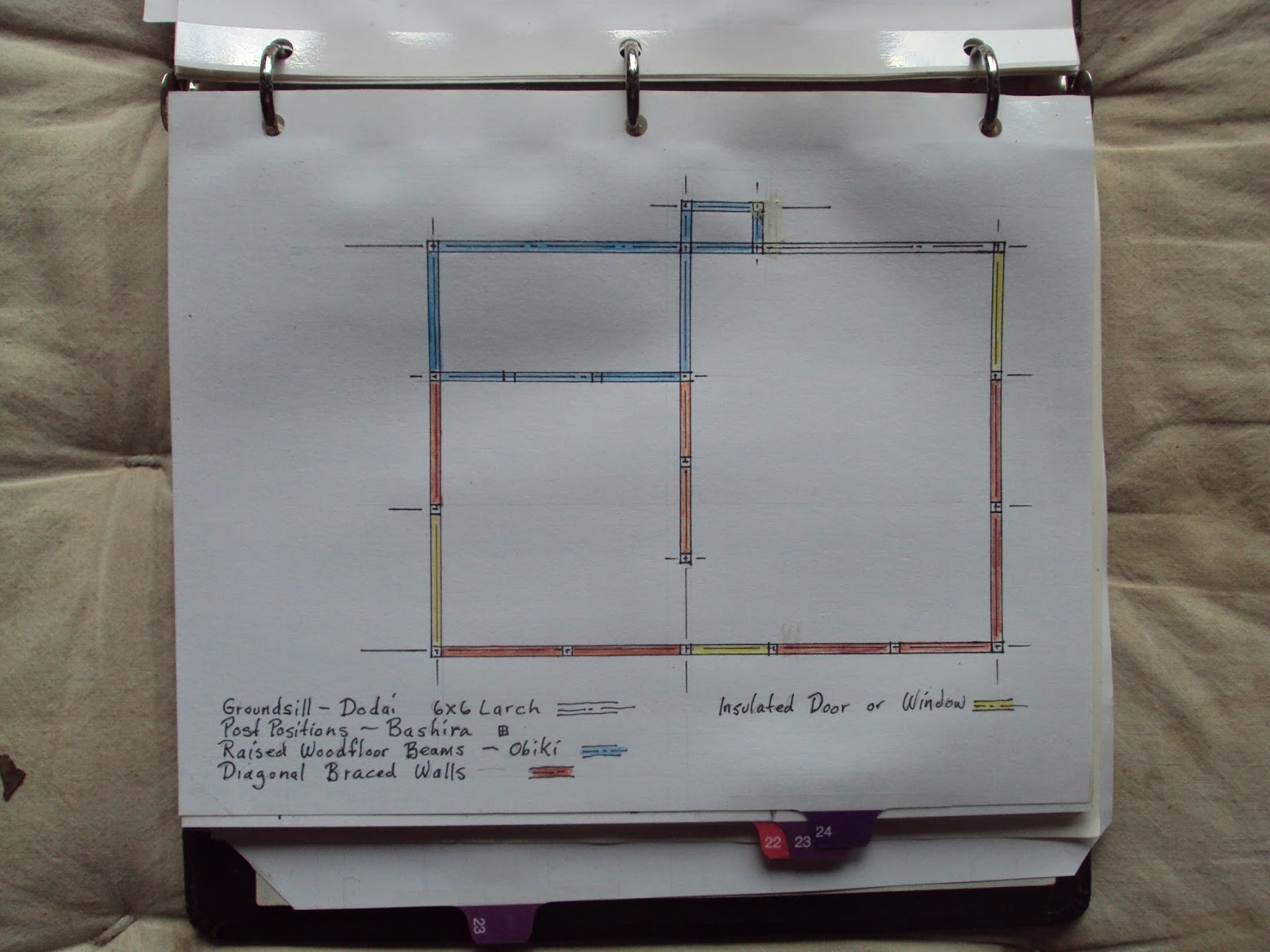
Foundation
------------------------------ ------------------------------ ------------------------------ -------------
south at top, 1/4 " = 1 ft. or shaku
------------------------------ ------------------------------ ------------------------------ -------------
roof structure
------------------------------ ------------------------------ ------------------------------ -------------
south elevation
------------------------------
------------------------------
------------------------------
------------------------------
roof structure
------------------------------
layout of tools, doors, and shoji; west room changeable except sen platform is more certain.
------------------------------ ------------------------------ ------------------------------ -------------
Thanks Mark, this is truly a great gift to all of us.
Monday, August 24, 2015
That was it
So, tomorrow I leave to Santiago to take care of my gaggia, make the bag for europe and prepare the last batch of chilenojapanese sharpeners. Next class is 12th, 13th and 14th of september, again in Santiago. Next week we meet again for Sergio's last class and doing some more joints with Pablo and Keiran.
Let's start with a video:
The saw is a bit ticker at the beginning, so when you are way into the cut you cannot use the full length, so it's not an improper technique of the fellow there.
Yesterday we were looking for stuff in the flea market, and arrive home around 2pm. It was time to lay out some between centres distances.
It took me a lot head scratching, but actually I didn't need to put the beams like that, I could have just measured with a plumb bob and the line. We checked with H1 and looked good if a tad short. I can make another joint at the end later, nay bother now.
The measurements. From centre to centre on the horizontal plane.
Today we marked the shoulders for the tenons. Again, pure centre line
Not so precise but I guess good genug.
And then the fast part, chop away what's not a horse.
Keiran left at noon. Now I think I take a small nap and finish the second and third shoulder, try to finish at least this tomorrow.
Considering that there was the biggest storm in the last 40 years during this month, and spend like a week cleaning the mess, I guess it went kinda fast. Last week I was already knackered, today I fucked my leg for not stretchting before work. I want to arrive to santiago and just sit and fix my coffee machine, not see wood for a few days. Timber framing really wears you out, and you need to work with more people, it's not something you can properly do alone. In average, each component of the joints took one day to make. The scarf joint 3 days to cut and 1 more to pare. We spent a few days just squaring some of the wood. No electricity was used save for the speakers. Cutting the mortice with a brace is a waste of time, chisel is way faster.
That's pretty much all. Almost a month in Valpo with dogs, hills, wine and woodworking. And lots of friendship.
Saturday, August 22, 2015
Saturday's Asado
Very typically chilean: eat meat and drink wine.
But friday night is sharpening night in valpo. French iron, argentinean stone and kiwi hands.
The stone has 2 grits along the length, on part cuts fast and the other slow.
Ok, this morning we started sharpening, because sharpening is the beginning of everything in life. That's 3 sharpeners in a row.
A bit later, the fire was on.
And the dogs working hard as usual. They played with me in the morning and remain tired for the rest of the day. Me too.
Morticing in the smoke, the best way ever to mortice.
Our good friends vino, papas y tomate.
And western plane being used a la japanese but the other way around.
I put the luthier to make timber framing. At my PhD defense one of the professors said that the most important part of being a teacher is to push people out of their comfort zone. I dig that idea, that's the only way you learn, when you are rambling unknown roads.
And Sergio to make a tenon (Pablo was doing the mortice, it was hilarious to hear them fight for whom screw it up first)
That's Sergio, on the back Juan Manuel, and you already know the kiwi
My work was at the bbq.
Starters.
And food for the doggies, burning the fat over there.
And wetting the planes and squares. Don't ya love the mix of planes, tools, glasses and people?
It was a good fun, that much is true.
Pablo took a picture. I don't like pictures of myself but what the heck, we are making history so let's take a few.
Wednesday, August 19, 2015
For Love or Money
"L'amour est a reinventer, on le sait."
Rimbaud
I was reading a post about crafts and society and this phrase struck as totally, completely wrong. "At this point in time we are faced with the fact that we may only have a one method to make change and it's through where we put our money." I think it was the god young Oscar Wilde who said you cannot fix poverty with the same means that create it. If it wasn't he, tan pis.The expression “for love or money” is generally used to indicate the two extremes, which cover between them the entire spectrum. “I wouldn’t do that for love or money” means I wouldn’t do that in exchange for anything. It can be interesting, however, to read that or as marking not an opposition but a common function that love and money share, somewhat like the or in Spinoza’s famous phrase “deus sive natura,” which claims polemically that god and nature are two names for substance itself. I do not intend to propose that love and money are the same thing, but rather, that putting them in relation can reveal the power to create and maintain social bonds that is proper to money and can (and perhaps should) be also the vocation of love. Posing love in relation to the power of money can help us construct a properly political concept of love.We lack such a political concept of love, in my view, and our contemporary political vocabulary suffers from its absence. A political concept of love would, at the minimum, reorient our political discourses and practices in two important ways. First, it would challenge conventional conceptions that separate the logic of political interests from our affective lives and opposes political reason to the passions. A political concept of love would have to deploy at once reason and passion. Second, love is a motor of both transformation and duration or continuity. We lose ourselves in love and open the possibility of a new world, but at the same time love constitutes powerful bonds that last.
It doesn't really matter where you put your money, it eventually spills to BP and BP spills it back at you.
(I do love how ideology at its purest appears here, by recourse to the facts. "Sie wissen das nicht, aber sie tun es," they know it not, but they they do it, said my german friend. )
Then I was reading yet again a very poignant text on the extinction of crafts in Japan: http://www.tokyofoundation.org/en/articles/2010/handicraft-extinction-1
I like to re-read things I like, since I always find mistakes on the text that the previous time I didn't see because I was too thrilled by the content. The mistaken sentence was this: "There were always cold, hard economic reasons for the extinction of a trade." Then he goes to argue what happened with natural resources and labour, and finish with: "But the most basic reason was that demand for the hand-made items produced by these cottage industries had declined sharply."
It's true that there are cold, hard, very real economic reasons for the extinction of manual work around the globe. But those cold, hard and phallic economic reasons are put forward with a big shovel of politics and violence. Political violence as in Greece, or pure violence as in Chile 50 years ago. Oh wait, didn't they throw something like a nuclear bomb in Japan before transforming its means of production from hand made to machine made? I may be watching too much anime and started to see violence in every economic transformation I find —my bad.
And now for the Gonzalez turn: saw sharpening was always a labour of love. If you don't believe me, sit there and learn it. Without love you end up nowhere. Saw sharpening as a technique is not coherent with global capitalism because is a work of love. And if you want to keep saw sharpening alive you need to simply restructure the whole of the global economy. Besides that, you would be stopping more global warming — but that's secondary, what's important is that we have sharp saws, and that our children have sharp saws, and the children of those children have them too. If they also have an environment and wood to cut, it wouldn't hurt.
Somewhere further along the article Hardt says that love should be able to organise social relationships. Ya know, instead of working for wages working for love. Instead of paying teachers to develop a curriculum in a university and teach it, make it ourselves and teach it ourselves, not for money but for love. You see where I'm going no?
Sounds crazy, I know, but the only crazy ones are the ones thinking that a steady growth and GPD indices will solve all our problems. They have been not only proven wrong by history and the environment — they didn't solve any problem and destroyed the biological support for pretty much life on earth in the attempt, in just a few years —, they have also showed themselves stupid, mad and selfish.
Love is to be reinvented, said Rimbaud. And one knows it.
A gut feeling that is, but a truth nevertheless.
Tuesday, August 18, 2015
Center lining
Today I was by myself here. Not so easy to move the 6 meter beam and separate the members for another perhaps final paring. I found out that the book didn't include the taper for the wedge that helps separate the pieces. Also moved the pillars, A3 and A2 and started marking things.
I like to look at this joint.
There was a particularly interesting moment today when I was thinking of how to compensate for the difference in height that the pieces have.
We squared one, the other remains twisted and a bit cupped.
You can see that at the end of the 6m the piece goes a bit to the left. It also goes up and down a fair bit. But I don't mind, I just make a shouldered tenon in 3 direction, and most importantly, I simply measure from the centre line. That way I don't care about the shape of the wood. It was real great moment.
Then I started writing names on the beams.
I did the centre line with a chalk line, It was not so bad, just very imprecise. Then started chopping that mortice. I thought of Gabe and took my shoes off. What a good feeling man. Plus you get extra focus to saw when your toes are close to moving iron.
And something I don't really like to do, I used a brace and bit to speed up the process. It's hard work, I wouldn't have thought so. The beam is a 6x6 or a bit more maybe. No idea what wood.
I started with the ryoba but was definitely not the tool for the job.
An hour later or maybe more, I had that. Then hammock. Still my arms are in pain for all the moving here and there of the beam.
It doesn't sound like much work for a day but it's finally starting to come together. After having done the spline, things seem to go faster now. I was thinking of using a thinner secondary horizontal beam, and use some of that left over wood to make the fence. I also think I need 2 more pairs of saw horses, so perhaps tomorrow I do that. Need to get food and a haircut though, so the morning will be in the city.
Labels:
patio baron
Subscribe to:
Posts (Atom)